
You inherit a house with a bad reputation and nothing else. It has been standing empty, and empty costs the same as full.
So you go out into the city: the outskirts, the slums, and the towers above them. You come back with people. You put them to work. You learn what they want. You decide how much of that you are willing to give. Some of them come to prefer you. Some never stop counting the doors. Then you die, and someone you raised inherits everything you built.
Text-driven, with more than 4,000 custom images: every generated resident has her own combined look, visualized down to the features.
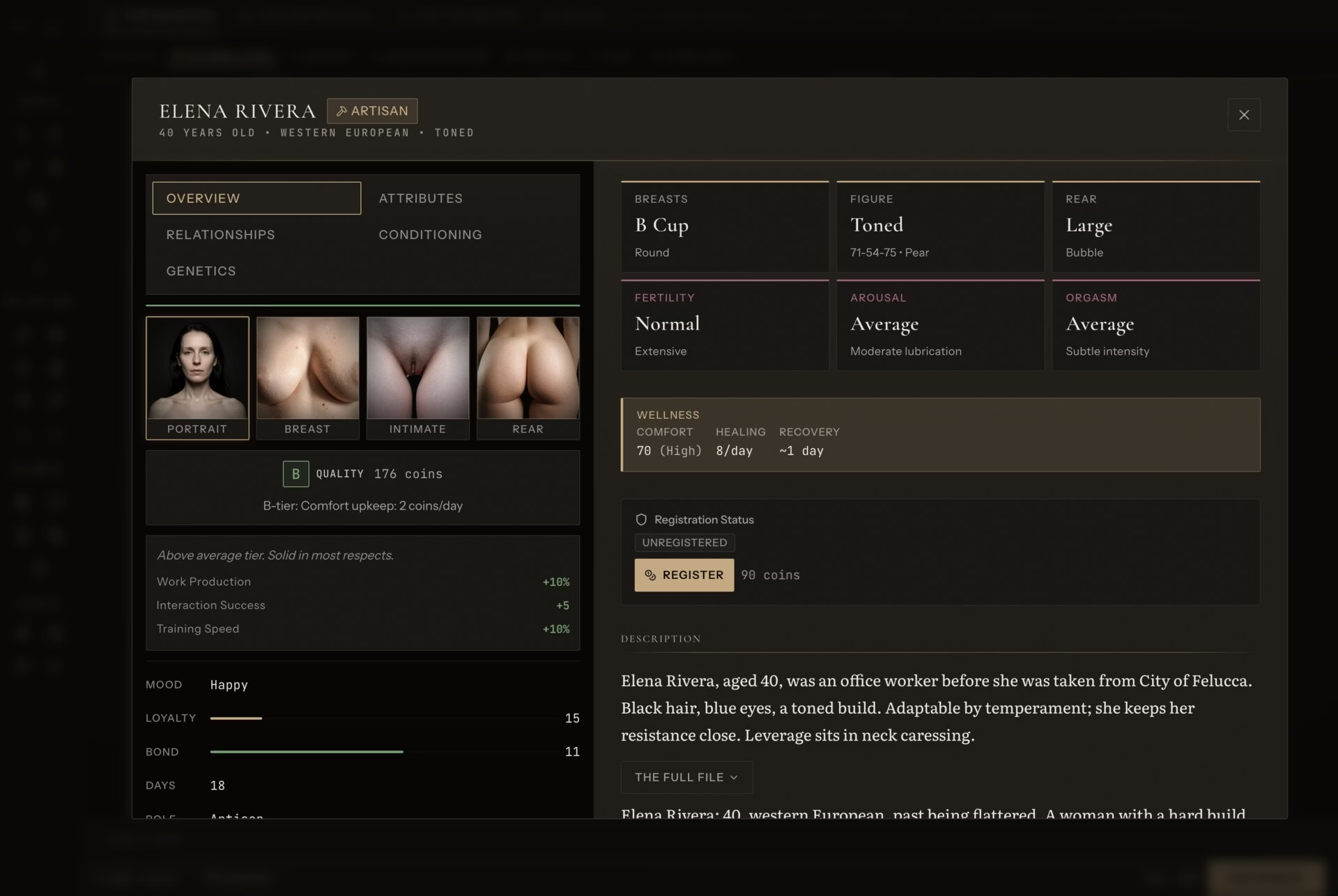
Nobody here is written. Everyone is generated. Every character is assembled from more than forty connected attributes: history, temperament, body, appetites, and heritable genetics that pass to their children. Two residents with the same job will not behave the same way, and the reason is always legible if you look for it.
The house pushes back. Every person you take is another mouth, another grudge, another way for the city to notice you. Heat rises. Unrest spreads. Illness moves through a crowded household, and rivals send people to find out what you have. There is no point where you can hold down “advance day” and stop paying attention.
The other houses have faces. Every rival is a woman with a temperament, a grudge ledger, and a bloodline she keeps apart from her roster. The houses play their own game against each other as much as against you, and when one falls she waits for your judgment.
- Rivals with faces. Every rival house is led by a woman with a portrait, a temperament, a kink, a fear, a desire, and a signature bloodline trait. She remembers what you did: an eight-deep grudge ledger drives her voice lines and a Reclaim that prefers the resident you stole. A rival from an older save gains her temperament on load.
- Prized stock. Each house keeps one to three prized residents apart from its roster, with real allele records. Intel opens the file at 25, 50, and 75; at 75 a kidnapping names its target. Breed does work now. Win a war and the foremost prized resident is yours when the Collection has room.
- The Reckoning. A fallen house waits for judgment instead of vanishing. Claim her into the Collection with her signature trait and her prized stock on the Trade Ledger; Vassalize her house for daily tribute and half-price residents; or Exile her with half her fortune, knowing a later era may send her back against your heir.
- The Exhibition. Four times a year the houses put one resident before the judges; the season decides what they weigh, and the projected score is the score they use. Between showings the houses trade: brood contracts buy fifteen days of a prized bloodline, stud rights sell five days of a resident’s time.
- Houses against houses. Rivals raid each other, seal and break pacts, and a house driven to the floor is absorbed by its strongest enemy. A leading estate faces a coalition with a visible meter and three counterplays. Rival houses bid under their own names at auction, list through the broker, and sell back what they stole.
- Courtship, the Paramour, and Union. At 50 Attitude an embodied rival will receive you: four staged scenes, two Focus a visit, ground that never decays. At the fourth stage she is your Paramour: intel daily, her designs softened, no pact and no coalition against you. A ruthless enough Paramour may sting once. When her house falls, Union brings her into the Collection willingly, bloodline and holdings following.
- Faction bounties. The Authority, the Syndicate, and the Covenant post work against the rival houses, one at a time, paid where the game already settles it, nothing owed if it lapses.
- The Theatre. From Clinic level 3 a fourth tab books permanent operations: twenty on residents across figure, face, skin, restoration, reproduction, and mind, the last of them the Quieting; six on you. Every operation shows its complication chance before you book. Convalescence displaces work, strain is permanent and shows in her price past 30, and how she takes the knife depends on where she stands with the house.
- Milk that runs its course. Forty days at full yield, thirty of waning, then it ends on its own; a birth restarts it and the Lactation Rite raises the plateau. The dossier names the phase.
- The prospect stays veiled. Her face is clear and her body views are not, until she is yours. Capture is the only key.
- The capture ledger, settled. Gear diminishes as the wiki always promised, three hands at most assist, a failed attempt makes the same prospect warier that day, mastery above the ground’s requirement pays, gear wears and a broken piece breaks its set, one loyalty table governs arrival, and the worst prospect is expensive rather than impossible.
- The estate pays for its keep. Work earns roughly a quarter to two-fifths more, production scales with the empire’s tier, registration costs 30 coins, and unrest settles 0.75 a day on its own.
- The estate holds under scrutiny. Two full audits ran down two hundred findings: thresholds wait for every writer before escape, cascade, or coup is judged, the ledger holds while events settle, and three thousand lines of dead code left the bundle.
- Every report answered. Focus is no longer spent on a cooled-down attempt, names keep their case, the neglect card reads the keeping clock, notices stack above the Steward, ranges in the Breeding Planner hold together, and thirteen more from the tracker and the inbox, from muted ineligible roles to a fresh Codex record on New Game.
- The Studio. Run ComfyUI on your own machine, give Settings its address, and Paint a study in a resident’s dossier commissions a new image of her: with her own face where your engine carries the likeness models, from her written description where it does not. Adult residents only, as everywhere. The game stays fully offline unless you connect an engine, and then it speaks only to the local address you gave it, never to the internet.
- The dynasty tree remembers how each story ended. A departed resident’s node carries her fate under a seal, with the portrait she left with, and the heir who took the estate wears the crown. An heir’s discovered traits now survive her ascension.
- Work explains itself. Every role is listed, closed ones name what stands in the way, nursery actions state the years their windows open and close, and the forecast runs the day’s own arithmetic, so the figure promised is the figure banked.
- Vitals are whole numbers again. No more 59.40000000000003 on a dossier; an affected save is cleaned as it loads, and figures on screen floor instead of rounding past a threshold.
- Every fold now unfolds. The day summary’s “2 more” and every control like it kept its contents on screen while the arrow turned.
- Ascension keeps its books. The next master’s endowment is awarded as stated, the ceremony promises only what happens, and a child can no longer be given her mother’s exact name.
- Interface repairs throughout. No empty frames stacked over a loading save, a trait investigation that opens instead of freezing, notices that respect the status bar, the save window’s label field in reach, character creation opening blank, Sworn residents that hold, and a nav rail that reveals a new destination at once.
- The notices ledger closes. The bell’s panel was drawn whether or not you had opened it, so the session’s notices sat over the interface from the first day. It appears when you press the bell and goes when you dismiss it.
- A tooltip you clicked past stays gone. Pressing a control silences its tooltip until the pointer leaves and comes back, and a window closing no longer strands one over whatever handed focus back. Reach a control by keyboard and it still names itself at once.
- Tooltips wait longer before they open. The hover delay is 450ms, half again what it was, so crossing a row of icons no longer leaves a trail of them behind the pointer.
- Panels open drawn, not empty. The first time you opened one of the larger panels it showed an empty frame before its contents arrived. The frame is held back a beat, the windows that live inside a panel load with the rest, and that loading finishes even through the busy first seconds after a save.
- The Save and load window takes a slot again. The Cancel and Save bar sat on top of the slot list and swallowed the clicks, so nothing could be picked and Save never left its disabled state. Every pinned bar in the game now rests on the edge it was drawn for.
- Panels use the height they have. Each scrolling panel reserved room a second time for the bars beneath it: on a 1366×768 screen that cost the stage 166 pixels of a 464-pixel box. The Steward’s rail no longer claims the full width of the stage either, which was cutting location copy mid-sentence.
- Accords hold on every surface. The threat banner no longer warns of a raid from a rival you signed with, a rival will not offer an alliance while any accord stands, signing one lapses every offer already on the table, and an offer you cannot accept names the accord that binds you and the day it ends. The in-game wiki’s Rivals article now states those costs, durations, and thresholds exactly.
- Work pays what it earns. Fractional output was thrown away every day instead of carried, so a resident producing half a unit a day produced nothing at all. Half a unit a day is one unit every second day now, and the figures on screen are the figures the estate banks.
- The Codex counts the living. After an ascension, Retention reported a dead household. The residents who carried over, and the heir you elevated, are alive in the Codex again.
- Smaller repairs. The nav rail holds still while a tooltip is open, a dossier opened from the Trade Ledger stacks above the Management panel instead of fighting it, a locked location no longer stretches the page sideways at 1280 wide, and Arrange companionship on Household Ties reads as a button rather than part of a heading.
- A Notices ledger. The bell beside the day counter keeps every notice the game has shown you this session, day by day, including the ones a window covered at the time. None of it is written to your save.
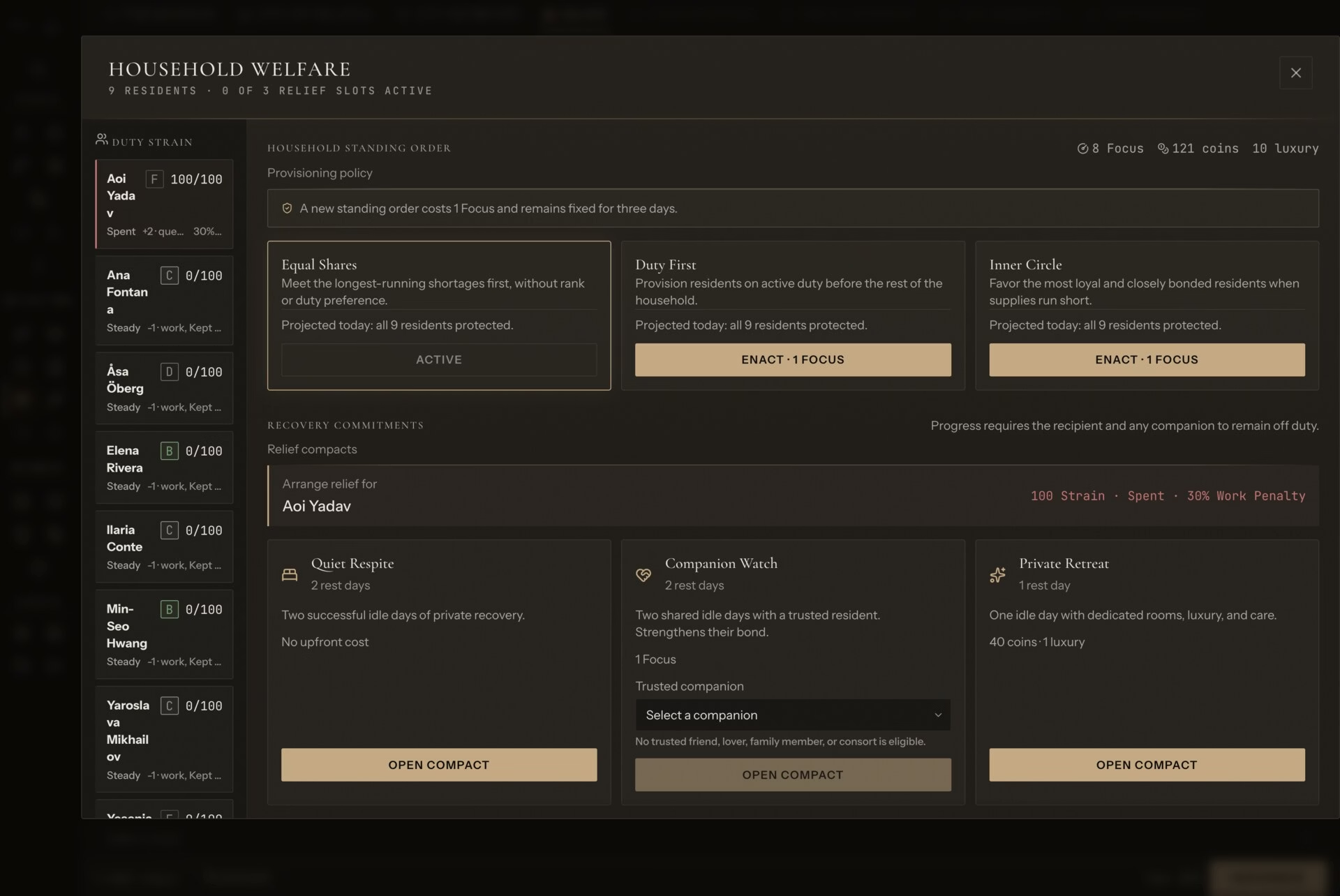
- Household Ties. Residents who share work or idle together form ties, up to 6 that matter. Companions sharing a role add 5% to each other’s production, confidantes and lovers 8%; rivals cost 5%, bitter rivals 10%, and rival pairs forced together add Unrest and come to blows.
- Romances you never approved. A quiet romance risks discovery every day; a discovered pair comes to you as a request: permit it, forbid it, or wait. Forbidden lovers of a defiant cast keep meeting anyway, the pox travels between lovers, and a lover sold or lost leaves the survivor seven days heartbroken, working at seven-tenths.
- Your hand. Set each resident’s arrangement: Free, Companionship only, or Kept apart. Arrange companionship for a pair, keep a pair apart, or fan a rivalry for seven days of harder work and a deeper feud. The market reads all of it: a heartbroken resident lists 8% under her worth, a resident whose companion sold within the week 6% over.
- Keeping. Every resident wears one of four words: Light, Steady, Needful, Consuming. It says how she slips when untended and what satisfies her. Her patience is its own trait: two days for most, five for the independent, eight for the truly self-possessed.
- Five ways to lighten it. Daily rounds carry the easy half of the house. An Attendant tends up to three wards in your name. A resident held loyal, devoted, and unhurt for ten days swears herself to the house, and nothing slips from neglect again. A content house steadies its own newcomers. And the Apothecary keeps the Lethe Draught, which quiets the need to be seen, at the usual price.
- Capture tells the truth. The odds breakdown itemizes every step of the real roll and reconciles exactly, barter states its real price, a failed capture names the approach with better odds, and a failed seduction prospect stays in the grounds for the rest of the day, warmer for the attempt.
- The first days arrive in order. The rail names every door and what opens the locked ones, day one points you at the open location, day two’s unlocks lead with the few that matter, and the day summary groups the world’s events and headlines your progress.
- Fixed. The first panel’s skeleton flash and replayed entrance, the Estate Council’s scattered office cards, the Family Tree drawing itself into knots, resident names truncating on the roster card, and the swallowed first click after closing any window.
- Resident listings. The Trade Ledger’s new Resident listings tab posts five names every seven days, from the Trade Ledger broker and the Licensed broker. Night Market reputation 20 adds a private household, Night Market access adds its own broker, and faction standing 20 adds a faction agent, to a ceiling of eight.
- What the seller says, and what is true. Until you inspect, every line on a listing reads as confirmed, an estimate, a seller claim or unknown, and a high-risk listing withholds the health record outright. Inspection costs nothing and moves neither the price nor the closing day. The quoted total is an asking price plus a 3% broker fee, and nothing else is charged.
- Three ways to sell. A direct sale takes 12% and pays the same day. A resident consignment takes 4% and pays after seven days, always above the direct quote. A resident auction shows a range, fixes the exact figure before you confirm, and settles after three days.
- A sale is not the last of her. She waits seven days, then the brokers may post her again, twice more before she retires from circulation. Identity, history, registration, healing injuries and any regimen still working in her come back with her. Household relationships do not.
- Demand answers what you do. Buying raises it 2 and selling lowers it 2, every whole three points moves the price one percent against you, and it closes back on neutral by 4 a week.
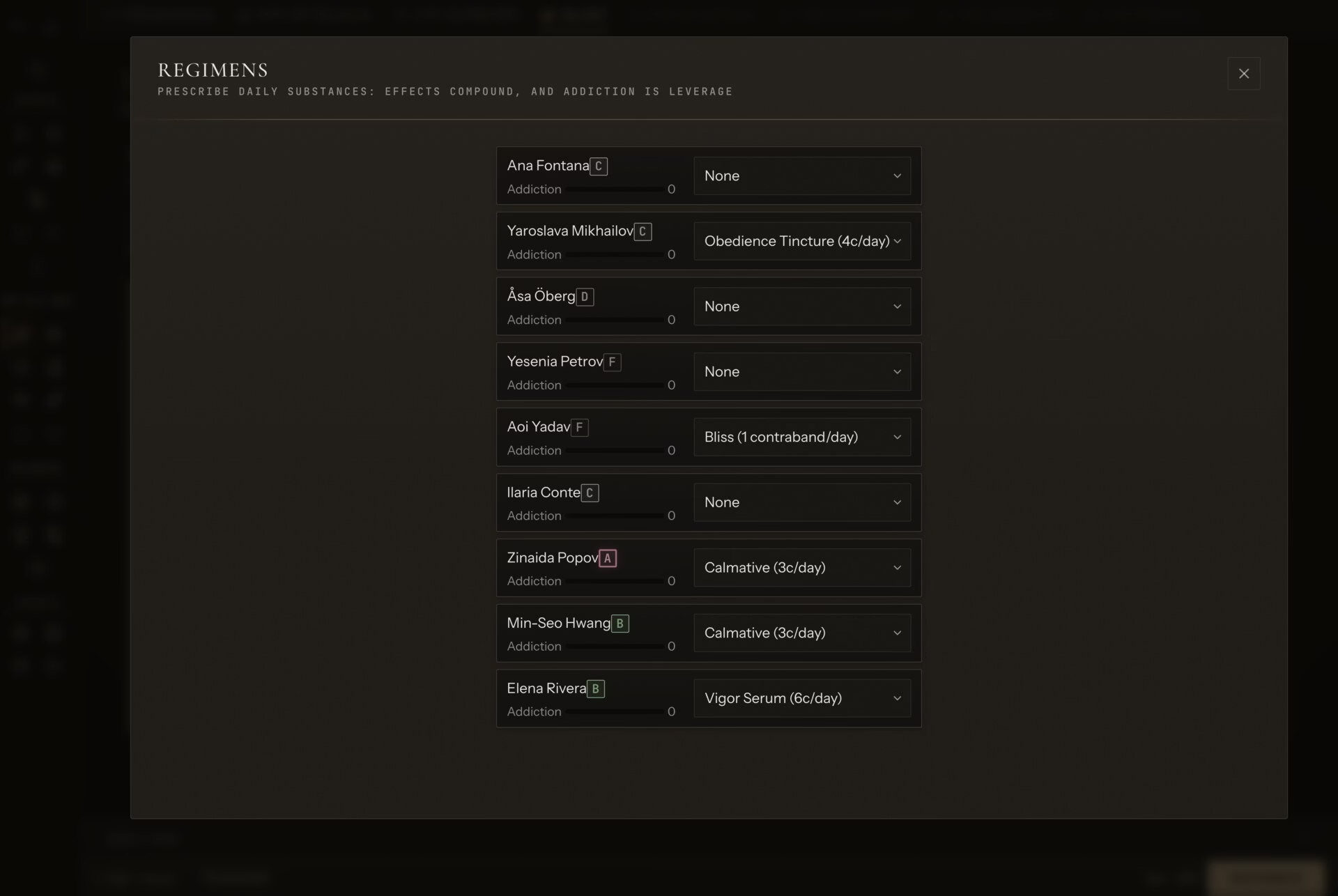
- The Apothecary. A nineteenth facility with no doctrine gate: 900 coins to raise, 6 coins per level a day, eight levels deep. Fourteen formulations, four of them starter knowledge, the rest researched along a chain running from body and intimate work through fertility, early labor, and the two that end a line for good.
- Research, then refinement, then stock. One bench serves both, and every known formulation runs from Rank 0 to Rank III, each rank adding 10% yield and taking 10% off toxicity. A cardinal Library raises research up to 40%, a cardinal Clinic raises yield up to 30%, and every compounded dose is counted stock that runs out.
- Regimens. A course doses every 1, 2, 3 or 7 days, stops at a toxicity ceiling of 20, 40, 70 or 100, and runs continuously or for a fixed number of doses. At 20 addiction she is Dependent, and withdrawal costs up to 6 trauma and 4 obedience. Toxicity is one shared burden: from 40 it brings that formulation’s warning reaction, from 70 its severe one.
- Two matters of its own. A resident at 40 toxicity or more can bring The dose turns, where stabilizing costs 120 coins and ends every active regimen. Three active regimens can bring Whispers after dosing.
- Fixed. Descendants born under older builds carried a malformed genetics record that the Bloodline Assay and the Breeding Planner both had to read around; loading a save repairs them. The Transaction Log also said “rollback” to you, along with other lines written for a developer rather than for the house.
- One matter a day, at most. Every source of interruption goes through one gate now, so a bad day cannot stack a raid, an inspection and a bounty into the same morning. A negative matter opens no sooner than 3 days after the last one and no later than 6. Crises you earned still arrive when they are owed.
- No matter can bankrupt you. A coin demand stops at 40 coins and takes the rest in Heat, 1 for every 20 coins left unpaid, to a ceiling of 10.
- A matter can wait. Anything with a deadline can be set aside and settled later; the status bar counts what is pending and opens the oldest when you are ready. Five new opportunities, two of which bring you a person rather than a price.
- Facilities cost roughly half. A Bedroom is 400 coins and 2 upkeep, a Kitchen 300 and 2, a Clinic 650 and 5, and each level after the first multiplies the price by 1.35 rather than 1.5. Kitchen, Entertainment Hall, Infirmary and Training Grounds now pay their largest gain early and diminish after.
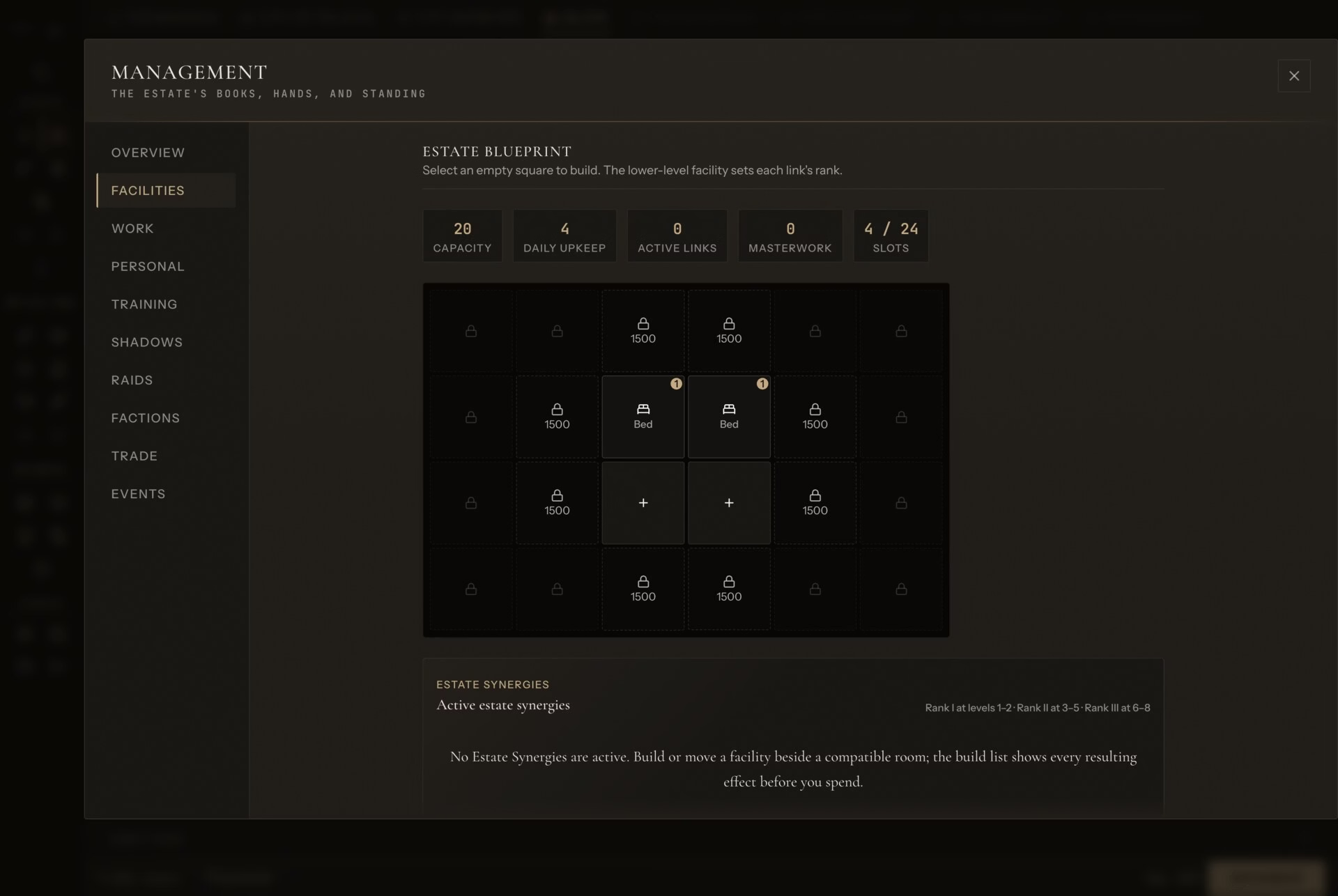
- The Estate Blueprint was rebuilt. The picker quotes what a square costs, what it returns and how long it takes to pay itself back. Occupancy sits in the stats bar, rings state the squares they add, move mode has its own bar and answers Escape, and the grid takes arrow keys. A finished building announces itself instead of appearing in silence.
- Interactions show the change as you make it. Loyalty, obedience and relationship were read once when a panel opened and never again, so you had to close and reopen it to see your own work. Every surface reads the resident herself now.
- An investigation charges what it says. Every investigation after the first was silently refunded its relationship cost.
- Trait bars stop overlapping at every interface scale, the navigation rail settles instead of resizing itself, and a held click on a portrait’s next or previous arrow pages instead of closing the image.
- Import from the title screen. A browser that clears storage between sessions no longer forces you to start a character you did not want before you can reach your save file.
- Equipment sets pay out. Ghost spares your first failed capture of the day its Heat, Diplomat adds 10 to a new resident’s starting relationship, and Breaker stops charging for a bonus it was not applying: +10% against a prospect at resistance 60 or higher, nothing against anyone softer.
- Breeder, Trainer and Healer do their work. All three charged stress and produced nothing. A Breeder now multiplies her own conception chance by 1.15 on every route, each eligible Trainer adds 1 obedience a day to every other resident, and each eligible Healer cuts injury recovery time 15%, to a ceiling of 30%.
- The legendary record is written. Nothing recorded a legendary carrier at all, so the Legendary panel stayed empty, the Ascension capstone deed was unreachable by that route, and the Bloodline Focused era modifier could not be won.
- Scavenge raids are scored as Scavenge. Raid power read the type off the site’s rewards, so the three Scavenge sites that list a possible captive were scored at the Hunt base of 60 instead of 80.
- Portraits are back on the resident dossier, and the hero image is 3:4 again rather than the letterbox it had been rendering since 0.5.
- Import and Export sit above both tabs of the Save and load window, beside the storage figures.
- A newborn no longer starves on her first day. The automatic milk sale now counts a child due that day at an infant’s share before it sells.
- A stood-down Guard keeps her place, so a second cannot take the slot and the first return on top of her.
- Panels open once. The loading skeleton no longer flashes a second window open and shut ahead of the real one.
- A failed quest says so, a destination opened mid-day appears mid-day, and Court Promises no longer back-dates a chapter on an older save.
- The in-game wiki was re-read against the code, article by article. Era modifiers had no article at all and now have one.
- The Breeding Planner projects a pairing before you commit to it, locus by locus, with comparison, capacity, fertility and the modifiers in play in the same window. The old Breeding Pen is gone; everything it did happens here.
- You carry a genotype and pass it on. What you fix in your own line is yours to hand down, not just hers.
- The projection shows only what you know. Commission a Bloodline Assay and the carrier and fixed states come back exact, on the dossier and as a filter across the Collection.
- Any promoted, living descendant can be named heir, whoever sired her, and bringing a bloodline trait to fixed in a third-generation or later descendant now closes an era as an Ascension capstone.
- The Nursery has its own place on the rail, hints at what a child is carrying, and tells you when a presentation is due. Children reach 18 in 36 days without a Nursery, and in 31.5, 27 or 22.5 with one, paid for in upbringing she never gets.
- Bodies are drawn from four independent axes (stature, adiposity, muscularity and torso shape) with their measurements anchored to published anthropometry, after a player reported the figures read like nobody had ever met a human. They were right: hips ran a median of 77 cm against a real-population 88 to 92. Those axes now breed like any other heritable trait.
- The menstrual cycle runs. It used to report the state a resident was generated with and never move off it. Conception follows the phase now, ovulation at 2.5 times the base chance and the menstrual phase at a tenth. Over a full cycle it averages out, so long-run birth rates are unchanged; the timing is what changed.
- The Steward teaches the bloodline in five new lessons, and the in-game wiki’s breeding chapters were rewritten against the live model.
- One vocabulary, everywhere. Terms that had drifted apart across the interface, the wiki and these notes were brought back to one word each.
- The build names itself. The version now sits at the foot of the left navigation rail, under the System group, so you can quote it in a bug report without hunting through filenames.
- The rail holds its width while a save loads. Loading a longer save made the left navigation rail flicker wide and snap back. It now keeps its shape until the save has fully arrived.
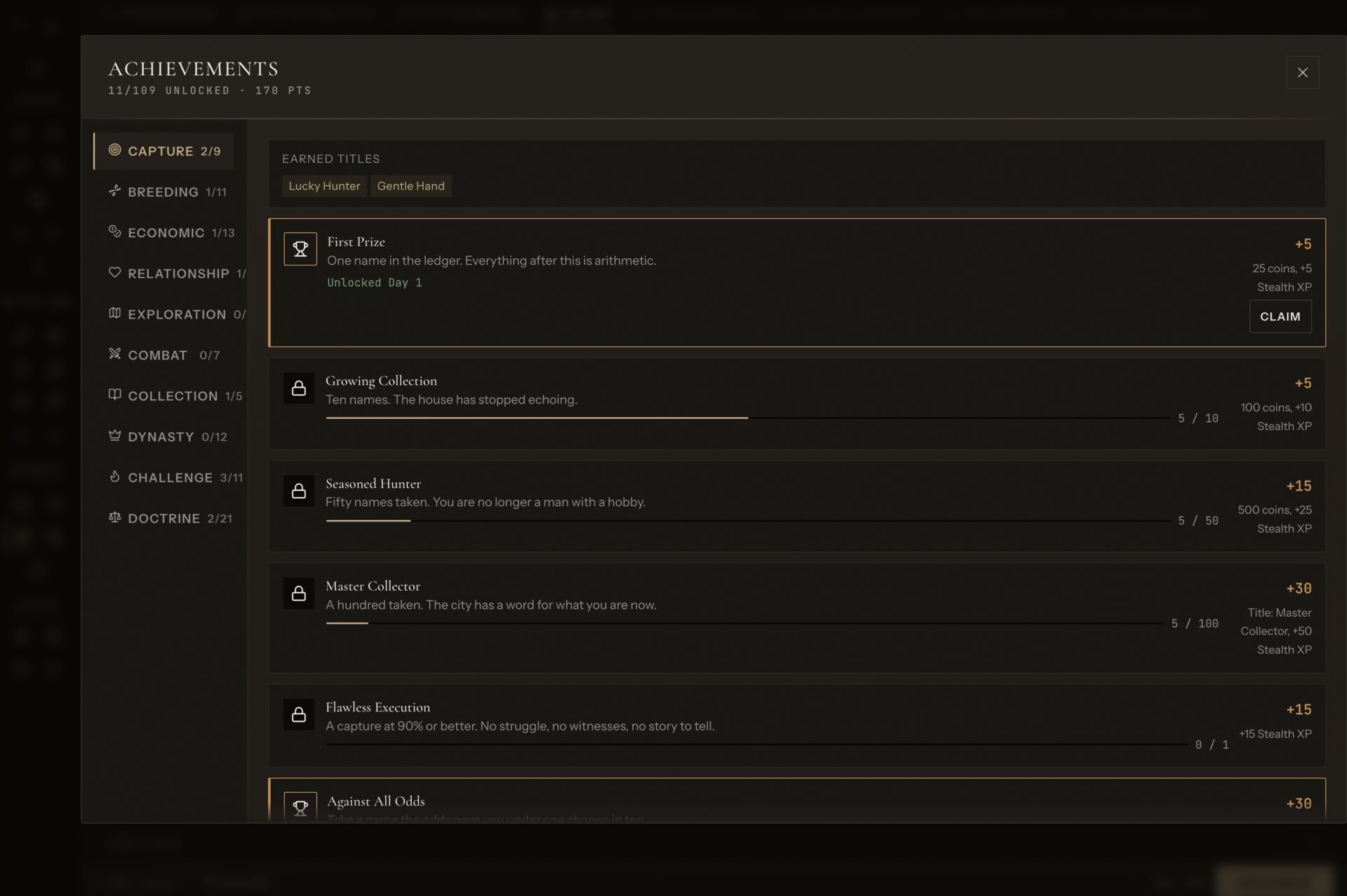
- Achievement counts stay on the page. The achievement screen’s category list cut off its progress counts on longer names. Every count is now fully visible.
- The interface stops wasting the width of your screen. Doctrines sit up to four abreast, character creation shows all four archetypes in one row, and shops lay out their goods in a grid instead of a single column.
- What you earn is marked. A chapter’s new ground gets a line in the day’s report, each newly earned destination carries a quiet marker until you first visit, and a newly live rail row catches the light once.
- The Standing Ledger continues. Eight new beats carry the early chapters’ guidance through the mid-game: each names its work, points at the door, and files itself when the work is done.
- One narrator. The capture manual, errors, empty states, tooltips and toasts read from the same hand. Errors name what failed and what is still true, and the crash screen leads with the fact that matters: your last save is untouched.
- The coup opens its ceremony. Unrest reaching 100 forces succession, and the ceremony now appears when it should.
- The market and the quest board take filters. Filtering, sorting, a running count of what is shown, and a one-click clear. The roster, Codex and Chronicle speak the same idiom.
- One meaning per icon, one vocabulary for numbers. A warning triangle no longer marks a good capture chance, and days, deltas and percentages render one way everywhere.
- Confirmations follow one rule. War, contract abandonment, demolition and doctrine changes ask first; demolition no longer stays armed after you walk away.
- Easier on the eyes. Text inks clear the contrast floor everywhere, the reduced-motion setting reaches every animation it used to miss, and Advance stays on screen in a narrow window.
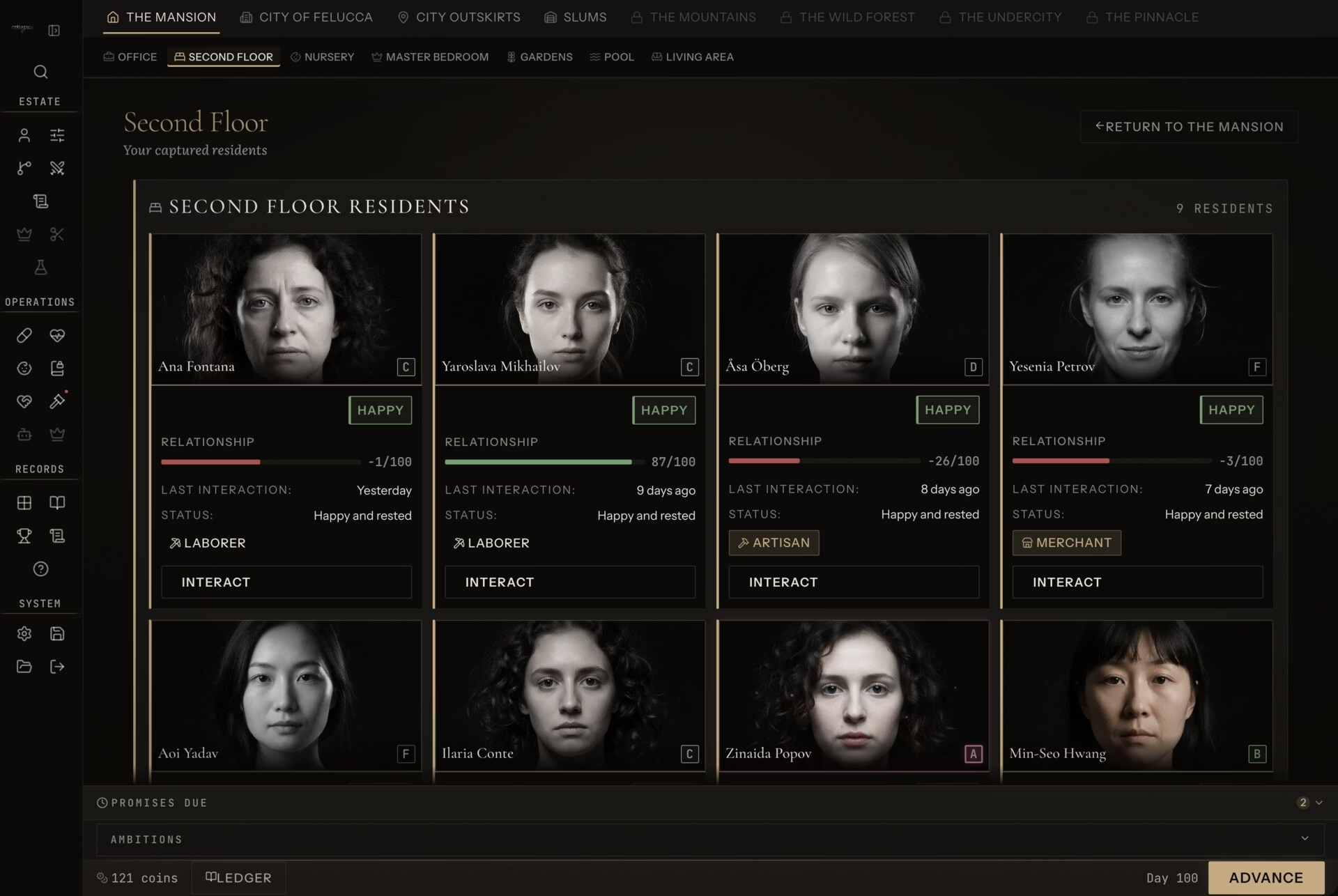
- Every surface shows the resident. Roster-style lists carry the portrait plate and tier, and the body-work pickers show the body they are changing.
- The manual moved into the wiki. Capture guidance lives one link from the capture screen, and the wiki gains articles on doctrines, standing orders and eras.
- A new estate’s first day advances. New games began on a day the counter could not display, so your first press of Advance appeared to do nothing and the second jumped straight to Day 2. A new estate now opens on Day 1 and every press moves the date.
- The day always turns. When the simulation fails outright, the day now passes and says so: the estate earns nothing and spends nothing that day, rather than the calendar stopping for good. Nobody is starved by a ledger that did not run.
- A bad hour no longer costs the whole day. If one part of the day fails, the rest still runs, the day’s report is still written, and the notice names what did not settle.
- Time is counted in days. Interaction cooldowns measure game days instead of real hours, so leaving the tab open overnight no longer clears them, and a save opened a week later resumes where you left it.
- Grief arrives on the right day. A resident lost during the day dates their partner’s mourning, and the window their friends have to answer it, from that day and not the one before.
- Residents taken in past raids get their names back. The last release named new captives; this one repairs the ones already in your house, on load, and the family tree, Codex, and heir records follow.
- The rival ledger tells the truth. A rival’s roster count matches the people actually behind their walls, a poached resident joins the rival’s roster and can be taken back by raid, and stolen residents arrive with the traits their dossier promised.
- Concluded wars step aside. A finished campaign shows its summary once, on the Rivals tab, then files itself in the Intelligence tab’s Campaign archive. The declaration warning states what actually happens: victory removes them for good, defeat leaves them standing.
- Every faction storyline can be finished. Defeat-a-rival objectives count your won wars, including the ones already won; the Syndicate’s smuggling run and the Covenant’s ritual are within reach when their stage opens; locked operations stay on the board with their price; every objective carries a note naming where the deed is done.
- Handing people over asks first. Faction delivery wants confirmation and credits only the faction you chose; tribute takes only what the objective still owes.
- The zoom button answers everywhere. Visibly, on every resident image, with all four views one click away.
- The rail names its destinations. Earned destinations are named rows, the rest wait in a small “Not yet” tray, and Ctrl or Cmd+K opens a palette that searches them all. The rail measures its own height, so the Wiki is reachable again at 1080p, and a Settings preference forces the compact or comfortable rail.
- The day always turns, or says why it cannot. Older saves with damaged trait data are repaired on load, a dead engine asks for a reload instead of leaving a button that does nothing, and a raid whose settlement fails reports it in the evening notice, keeps what was granted, and frees the planner.
- Raid captives keep their names. People taken in raids arrive under their own names, not “Raid captive 2” or “Rival resident 3”.
- The family ledger is honest. A mother’s dossier lists her children, she grieves the ones you lose, kin earn their work synergy in both directions, released residents leave everyone’s relationship lists the same day, and the house will not propose a lover’s bond between a parent and her own child.
- Pictures answer to the dossier. The zoom control is visible instead of waiting under the pointer, serves the interaction screen and the Codex gallery, and a mother’s portrait follows her figure across enough births.
- Traumatized residents recover. Trauma has always healed a little every night, with comfort setting the pace; now the state lifts with it. A resident returns to herself once her trauma falls safely below her own breaking point, the evening report notes the recovery, and a resident born with a Phoenix Heart shakes it off within five days regardless. The in-game wiki’s trauma page states the exact numbers.
- The raid planner answers every click. A blocked assignment says why instead of pretending it worked, a raid restored from a save can be edited and launched, and a planned resident who has left the Collection shows as a removable placeholder instead of jamming the management screen until a reload.
- Panels hold their shape. Black Ledger headings and the Household Welfare roster stay inside their panels at desktop, mobile, and scaled interface sizes.
- Resident cards stay inside the room. The Second Floor grid fits the available scene width on wide desktops and compact windows without hiding the first row.
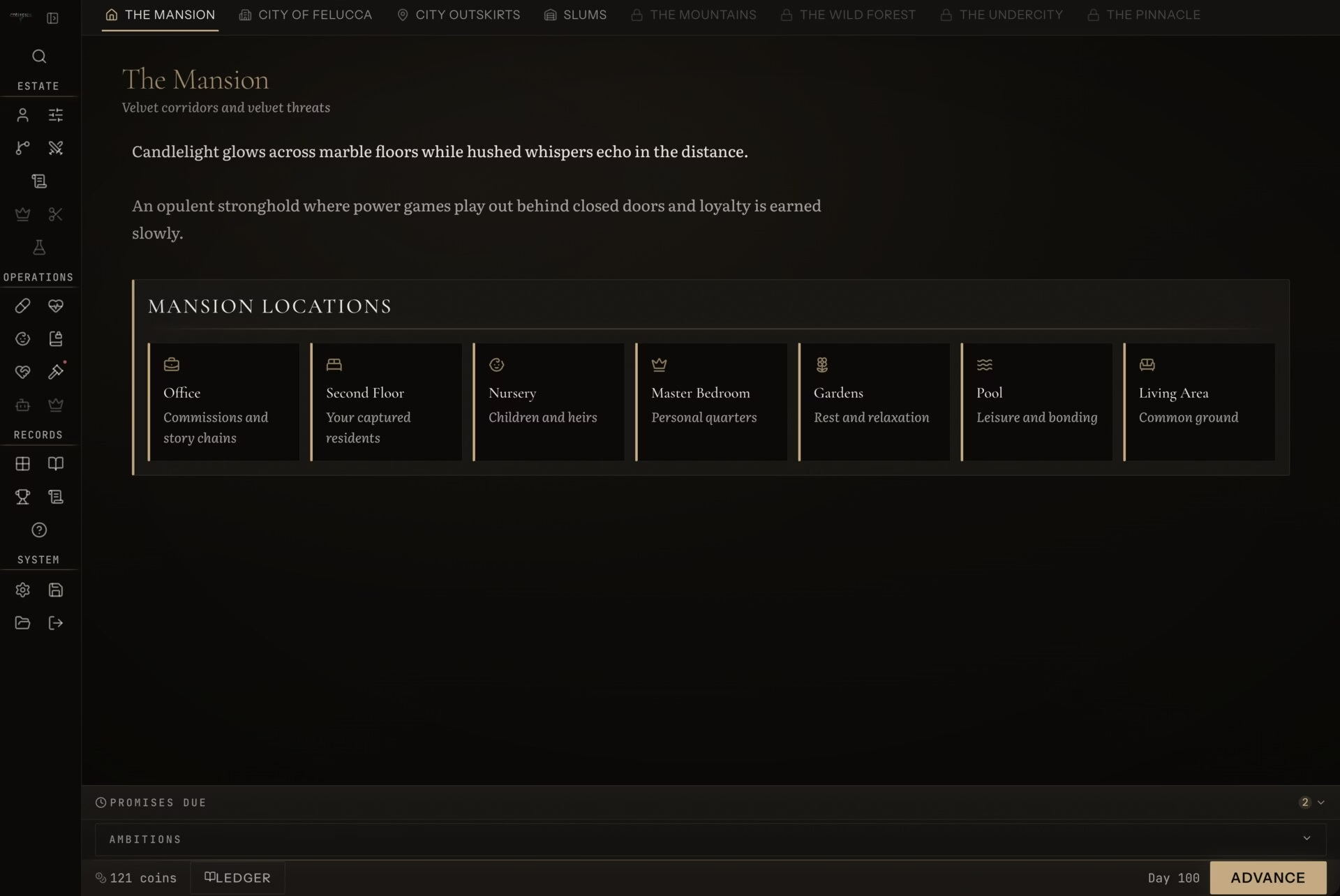
- Every card grid respects its panel. Locations, management ledgers, the nursery, dossiers, equipment, reputation, and the Codex fold to a contained column before their preferred card width can overrun the frame.
- Faction storylines progress. Objectives count the deeds they name: captures, births, operations, tribute. The Syndicate takes its payment through a real button, and progress already earned is credited once on load.
- A hunting ground stays open. Unlocks hold permanently, the Pinnacle’s gate genuinely requires a living descendant, and its B, A and S tiers arrive at the advertised rates.
- The trade ledger keeps time. Campaign and programme cooldowns survive closing the panel, and quests can pay standing.
- Talk delivers what it advertises, and a night together is entered in the resident’s record.
- Time off works. Idle residents make progress on granted rest, promised rest completes, and standing orders spare a resting resident.
- The doorstep has teeth. Turning away an inspection or a bounty crew can fail: coin, and sometimes a resident without papers. Celebrations happen once per milestone.
- Children take after their mothers, in portrait and in history. Children already in your save are repaired on load.
- Saves tell the truth about storage. A full archive says so at once, one bundled file exports every slot, and a save that only reached memory is reported as exactly that.
- Wars can be read, and won. The ledger shows both sides’ orders and the day’s arithmetic; the right counter is a strong edge; rivals with the strength to retaliate now do.
- The Office remembers what you finished. Quest progress survives a reload, and unlocks that count completed commissions count them correctly instead of starting from nothing. Story chains run their stages in order and hold the final reward for the last one.
- A board that states its terms before you sign. Duration, failure chance, required skills and full payment on every posting. Three to five stand open, and the board replaces them every three days.
- Raids take real people. Poach and Assault take named residents off the chosen rival’s own roster. A full Collection leaves them where they were rather than losing them between two ledgers.
- Six outcomes, one honest number. Perfect, Good, Partial, Marginal, Failure and Disaster, each with a stated multiplier. The estimate never claims better than 95% or worse than 5%.
- A raid is paid for once. Coin, target intel and 2 Survival Supplies per resident, all at dispatch. An injury or a new duty blocks the raid before any of it is taken.
- Eighteen facilities, and a blueprint to place them. Thirteen open to any house, five bound to a doctrine. From day 15 the Estate Blueprint turns placement into synergies between neighbouring rooms.
- Upkeep the treasury can survive. If the coin is short, none of the bill is charged. Paid effects idle for the day, capacity you hold stays yours, and the day report names the exact shortfall.
- Large estates stay responsive. Collection, Management and Shops stop sorting, counting and pricing the estate while their doors are shut. In a repeatable 250-resident benchmark, the closed Collection handled roster changes 95% faster.
- Open panels behave as before. Tabs, filters, selections and pending purchases stay where you left them, and each panel catches up when opened.
- A save is a promise now. Loading a game rebuilds the prospects on the streets exactly as you left them. Before, a rare few came back as strangers wearing familiar names.
- Coins move once, and only when owed. Refund and payment exploits closed across the Salon, events, ransoms, training, facilities, and mansion work. Prices are taken first and returned if the action fails.
- Poach and Assault raids produce targets. Active rivals now appear in the planner for both; they had been empty since the first release.
- Menus keep honest lists. Selection menus keep your current choice visible and step aside cleanly when the person behind it is gone. Screen-reader linkage completed throughout, and panel text no longer blurs on standard displays.
- Rumor has a ceiling. Passive heat stops at 60; past that, it takes deeds. The spiral where the city never forgot is gone.
- Work no longer grinds people down forever. A resident whose needs are met recovers duty strain on the job.
- Loyalty counts sooner. Residents at 70 loyalty or above calm the estate a little each day.
- The estate pays better as it grows. Coin production scales with your empire tier, up to 2.4x, and upkeep at the top has been cut.
- Skills level roughly three times faster, and variety pays more than repetition.
- Espionage funds itself. The Smuggling Run brings contraband in, agents build influence twice as fast, and an embedded Spy earns coin.
- A permanent injury stays permanent. Reloading a save no longer quietly heals what should never heal.
- Sidebars, tall menus, and modals scroll within the window instead of past it.
- Short and narrow desktop windows keep every control reachable, including at larger interface sizes.
- Locked destinations show their lock and the requirement that opens them, instead of accepting a click and doing nothing.
- Children grow up, and they join you. A child raised in your nursery reaches adulthood, is presented in a ceremony, and takes the Station you choose: household, trade, companion, Scion, or the door. How you raised them decides who walks out of that nursery.
- Real inheritance. Both parents pass traits, one copy each. Carry two copies and the trait is Fixed: it always shows and always passes. Only deliberate, patient breeding gets you there.
- The price of concentration. Close kin concentrate flaws alongside gifts: thinner potential, harder conception, defects surfacing from quiet blood. Outcrossing buys vigour at the cost of what you were fixing.
- Know before you breed. The Breeding Planner forecasts a pairing; the Clinic’s Bloodline Assay reads a resident’s blood outright.
- The household has opinions. Kin consent has to be earned through corruption, conditioning, standing, or doctrine. Force costs you the bond and turns the house against you. What stays private stays private; what gets out lands as your doctrine allows.
- Procedural characters. Background, personality, body, preferences and inheritable genetics, all connected rather than rolled independently.
- Capture and conditioning. Six approaches, and a long game of obedience, corruption and resistance afterwards.
- A household economy. Work assignments, facilities, production, trade, contracts, and a market that moves whether or not you are watching.
- Dynasties. Pregnancy, bloodlines, education, consorts, inheritance, and eventually handing everything to an heir.
- Pressure from every direction. Heat, unrest and disease inside the house; rival lords, factions, espionage and raids outside it.
- Local saves. Six slots, no account, nothing leaving your machine, plus export and import.
- Balance. Which loop stalls, which resource is trivially abundant, where progress feels unearned or grindy.
- Bugs. Export the save and attach it. Because generation is deterministic, a save plus the day number usually reproduces the problem exactly.
- Legibility. Anywhere the game does something to you and you cannot work out why. That is a design bug, not a you problem.
- Determinism as a design commitment. Characters are regenerated from stored seeds rather than serialised wholesale. Nothing rerolls behind your back, and outcomes are reproducible.
- Legible odds. Every capture and interaction shows the full breakdown before and after. No hidden fudge, no invisible pity timer.
- Consequence that compounds. Heat, unrest, grudges, disease, and rival attention all feed each other. The failure state is a household that quietly stops working, not a game-over screen.
![Stepmom Paradise [v0.5.7b] [PocketStorys]](https://hornygames.to/wp-content/uploads/2026/08/6084767_Diseno_sin_titulo_1.avif)
![BangMon [v0.1.3] [BangDevMon]](https://hornygames.to/wp-content/uploads/2026/08/6308286_BangMon_TitleBanner2.avif)
![High Tide [v0.0.2] [PocketStorys]](https://hornygames.to/wp-content/uploads/2026/08/6291031_grok-image-53a45b36-c207-4093-95f0-0a7dbbf9d620.avif)
![Hexmoor Academy [v0.02] [Opsmaser]](https://hornygames.to/wp-content/uploads/2026/08/6392522_Banner.avif)
![Successor Remaster [v2.6] [RoxxGame]](https://hornygames.to/wp-content/uploads/2026/08/4891460_cover1.avif)
![City World [v1.0] [V-Tune]](https://hornygames.to/wp-content/uploads/2026/08/6246009_5366240175689768120.avif)
![Rome, 105 BC [v0.1.7c] [30Roman Studio]](https://hornygames.to/wp-content/uploads/2026/08/5871098_1000143087.avif)
![Wayward [v20260809] [Sintention]](https://hornygames.to/wp-content/uploads/2026/08/6383015_1786783769555.avif)
![The Fapocalypse [v0.6.1] [FAP Online Creation]](https://hornygames.to/wp-content/uploads/2026/08/6309405_Pi7_GIF_CMP-600x150.gif)
![The Auferas House [v0.2] [PocketStorys]](https://hornygames.to/wp-content/uploads/2026/08/6278404_grok-image-e1a80aa5-9a5f-43ad-b173-55fe8639e21e.avif)
![The Sissy Girlfriend Experiment [v0.14.7] [jammye.jones]](https://hornygames.to/wp-content/uploads/2026/08/141965_1.avif)
![Hidden Hearts [v0.1] [PrismG]](https://hornygames.to/wp-content/uploads/2026/08/6366207_1786434838757.avif)
![Nympho Tamer [v0.95] [Bottomless Pit]](https://hornygames.to/wp-content/uploads/2026/08/4137329_nymphoitch_2.avif)